

Writing is a way of recalling. Not too long ago, I sat back in the saddle on my daughter’s horse for the first time in many years, doing all the once familiar movements again. A whole world was brought back: the intuitive attuning to the horse’s movements, the rising smell of warm fur and leather, even the same familiar flicker of apprehension in my chest. It is curious what we don’t forget. Somewhere, all experiences and ages are still contained in us, and with the right reminders, they may rush back to us.
Seen this way, creative work is a form of recovering ourselves. As if driven by some magic impulse, we draw from our obsessions and the myriads of past impressions. Creativity pulls us into distinct expression. What we create, on canvas, page, or other ways, is intimate work and often specific to a few of our recurring questions and themes.
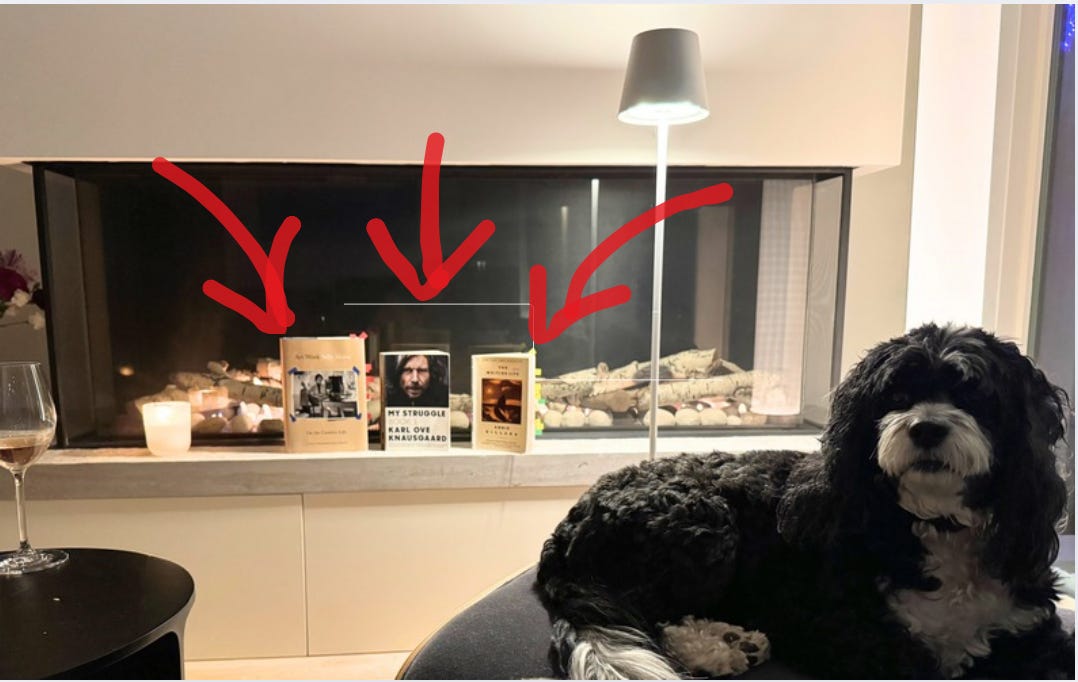
I’ve long been fascinated with understanding artistic purpose and how it feeds the creative process. In 2025, three exceptional writers/creators found their way to me–Sally Mann, Karl Ove Knausgaard and Annie Dillard–highlighting in distinct (and overlapping) ways what drives them creatively and how they walk the lines between their art, life, and memory.
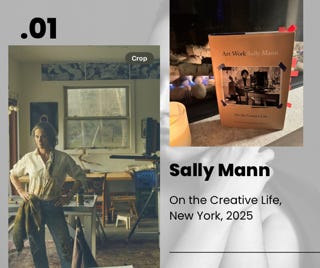
Sally Mann: Art Work – On the Creative Life, New York, 2025
Make enough work to curate recollections from your life. Make enough work so we know what it’s supposed to look like,
writes Sally Mann in Art Work–On the Creative Life. In this recently published book, Mann, considered one of the most iconic female American photographers, pulls away the curtain onto the history and details of the creative process she developed over her long artistic career.1
When she was a busy mother of three children, living in rural Virginia, she learned how being creative is as much about constraint and concentration as her own personal history, her own stories, and ultimately her soul:
All of my creative work is based on a few sensations, experiences, visions, and ideas that were imprinted (...) in our past [and that] will have carved a trace in our soul. And no matter how distant or tenuous that trace, it will ultimately reemerge, enlarged to easy legibility and unignorable; the tyranny of memoria.
Mann describes her creative process as closely tied to personal recalling and curation. Drawing from a vast ephemeral storage of visual images that she collected over the years, either in her imagination or curated on messy mood boards, she allowed her inspiration to be guided and channeled into her own artistic concepts and inspirations:
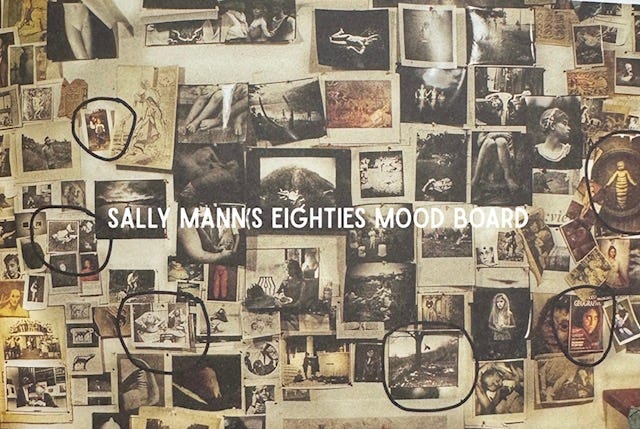
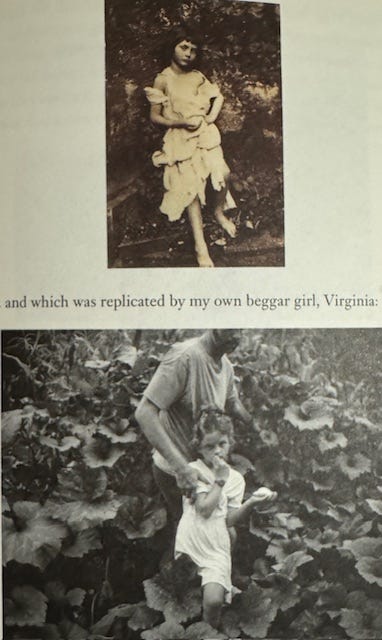
And then, there’s a different kind of list. This is an unwritten list of remembered images, magpied up and stored in what I think of as my visual memory… [It] is composed of images–photographs, paintings–I have stored away as references with the hope that they will appear when I need them, like when I am composing a picture under the dark cloth. But my ineffectual system of retrieval from the mind’s musty archives has forced me to employ the simplest form of mnemonic device–images on paper. A close look at my bulletin board from the late 1980s reveals the unabashed evidence.
To the greedy and curious reader like me, it’s incredible to find so much specificity in her book around how she took original inspirations from collected images and translated them into the scenes and shots that made her work famous. Based on a few circled images on her board, she felt inspired to “imitate, inadvertently or deliberately, but probably invariably, the works of others.” In that way, we can follow her creative impulse and eye!
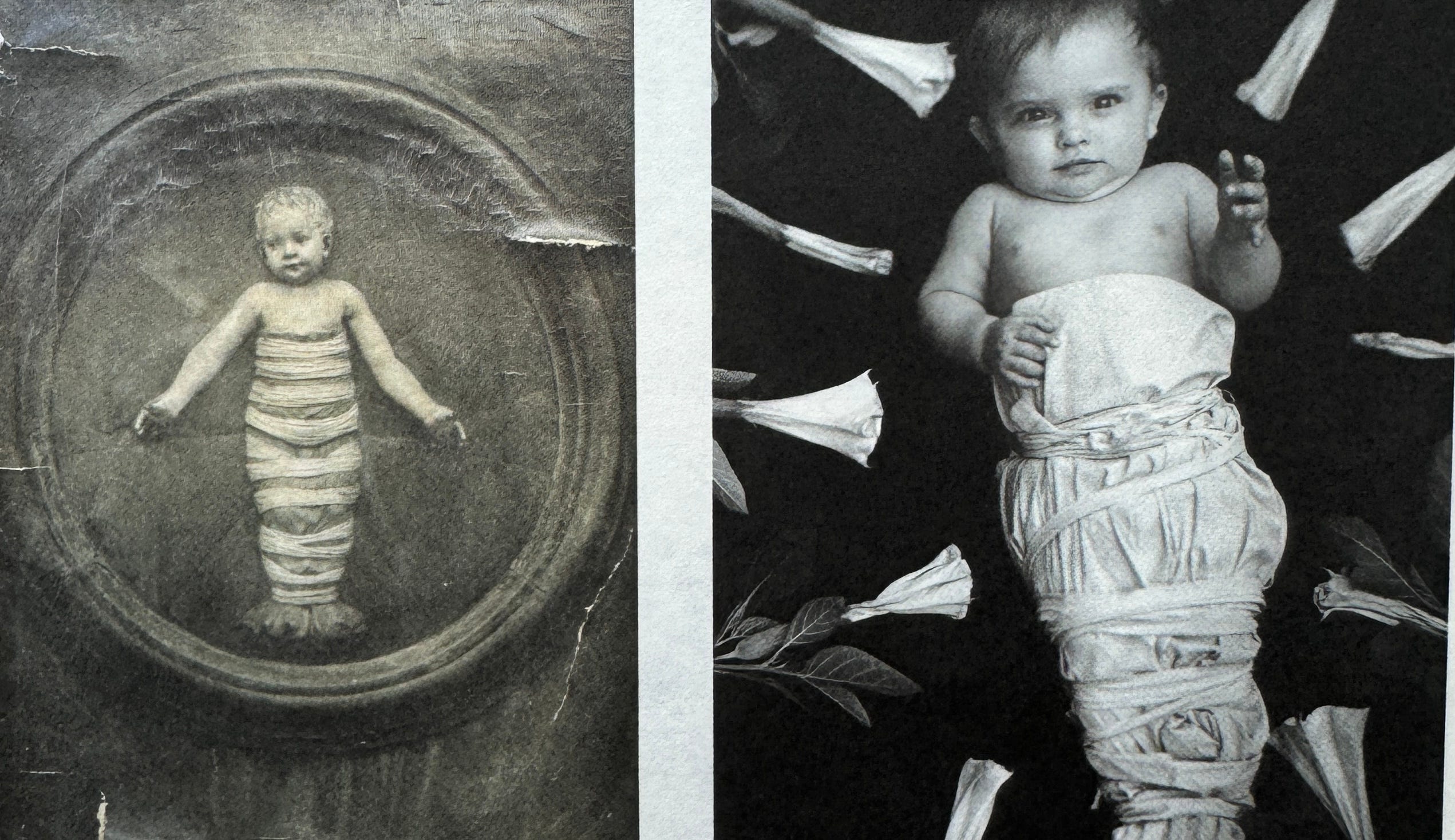
A necessary and central part of her work, Mann advises, is producing a fair (or even large) amount of “bad” work from which the best work can eventually rise (I wrote more about this idea and process in my essay “The shiny wreck of the perfect idea”) by way of following a few core themes and topics she’s felt attracted to in her life and work.
While I’m not a professional photographer, I was surprised and stoked to find some of my own creative process reflected in hers. How much frustration and elation are folded into artistic aspirations, and what it takes to keep up a disciplined practice alongside the chaos and richness of family life.
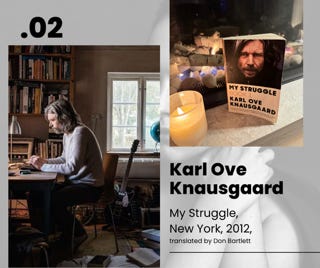
Karl Ove Knausgaard: My Struggle (Book 1), New York, 2012
Writing is drawing the essence of what we know out of the shadows. That is what writing is about. Not what happens there, not what actions are played out there, but the there itself. There, that is writing’s location and aim. But how to get there?
What Sally Mann expresses with imagery in her photographic work, Knausgaard does with hypnotic prose. Imagine a modern Proust: amid an ocean of quotidian experience that Knausgaard braids into a 3,500 page-long fictionalized autobiography (split into a total of six books, and I am quoting here from book one) about his life and his Norwegian upbringing in the seventies and eighties.2
The attraction I’ve felt for this book from page one isn’t immediately easy to explain. My Struggle doesn’t shine by the most elegant prose, is at times repetitive (you’ll encounter endless coffee cups, cigarettes, and occasional cliche) and not even all true to his life’s “historic” details, as Knausgaard has often confirmed in interviews. But what it does is even better: the reader experiences a life. Driven by a few core memories and the thoughts and beliefs that he considered to be (and remain) true, Knausgaard has an intensity of focus and emotional authenticity that made me relate to what Zadie Smith said about this book: “You live his life with him. You don’t simply ‘identify’ with the character, effectively you ‘become’ him.”
This life is full of contradictions and flaws, and Knausgaard approaches them with the precision of realism found in “the ordinary”. There is what we easily recognize from our own lives: the “enemies”, the shame, the love and the joys, plus the unavoidable emotional scars from the thousands of micro-impressions and misunderstandings of a sensitive child growing up. A pivotal experience in his life happens when his father, at that point ravaged by acute alcoholism, dies from a heart attack at the age of 56.
This is the material a life is made of, and it is the same material we draw from when we write and create. Only seemingly mundane and small. In reality, it is immense.
I see [my father] as I saw him at that time, through the eyes of an eight-year-old: unpredictable and frightening; on the other hand, I see him as a peer through whose life time is blowing and unremittingly sweeping large chunks of meaning along with it.
His “meteorology of the mind” becomes intricately palpable, for example when he writes about how his shame shaped his sensory perception:
After the item was over there was the sound of my father’s voice, and laughter. The shame that suffused my body was so strong that I was unable to think. My innards seemed to blanch. The force of the sudden shame was the sole feeling from my childhood that could measure in intensity against that of terror, next to sudden fury, of course, and common all three was the sense that I myself was being erased. All that mattered was precisely that feeling. So as I turned and went back to my room, I noticed nothing… I lay down on my bed, and switched off the light, and when the darkness closed itself around me, I took such a deep breath that it quivered, while the muscles in my stomach tightened and forced out whimpering noises that were so loud I had to direct them into a soft, and soon very wet, pillow.
The whimpering and the wet pillow–maybe, or surely, they were ours too. Whatever can be considered as “truth”, always subjective and personal, Knausgaard tries to dig it up from somewhere deep and lets us take part in its heavy (and at times hilarious!) gravity.
Knausgaard, by writing from the bias of his personal fears and enthusiasms, demonstrates–and in this way really not unsimilar to Sally Mann’s work–how good art has the power to restage what wants to return to us. In his devotion to detail, I recognized something about my own creative instinct: that the treasure of memory and what causes joy and pain is ultimately all I have, and writing is an important way to find intuitive access to it.
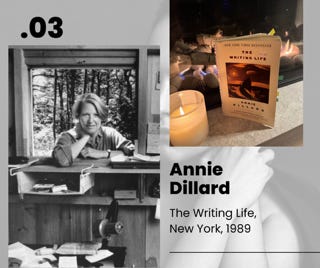
Annie Dillard, The Writing Life, New York, 1989
You were made and set here to give voice to this, your own astonishment.
This is what writes Pulitzer prize-winning American author Annie Dillard writes in her only book on writing, now one of my 2025 favorites. The Writing Life, published 35 years ago, is her passionate case to read and write what speaks to your own nature and weirdness, and what is already present in one’s mind’s eye, waiting to be structured and chiseled into meaningful creations. Words, in her case.
Like Mann and Knausgaard, she alludes to the importance of the personal recollections and materials that we already carry inside of us and like to return to, “as to unfinished business, for they are [the writer’s] life’s work.” Similar to Mann and Knausgaard, she gestures at the importance of being attentive to everyday, ordinary moments, “the by-product of [our] days’ triviality,” as to where we may want to look and dig:
This writing that you do, that so thrills you, that so rocks and exhilarates you, as if you were dancing next to the band, is barely audible to anyone else.
Although, it might well be audible to some. Dillard, a voracious reader since the age of five (footnote about her reading habits, see LitHub article and quote), draws from many other creatives in her book to support her view of how vital it is to work along the nerve of one’s sensitivity, for example delivering this stunning quote by Thoreau:
Pursue, keep up with, circle round and round your life… Know your own bone: gnaw at it, bury it, unearth it, and gnaw at it still.
***
This sensitive space draws us into creation and is where we can process, celebrate, admit, and find ourselves. Back to the original question from the beginning, and what these three books helped me think about this year: isn’t it curious what we don’t forget?
I can still imagine intricate details from the arenas I used to ride in when I was young. The smell of the tan footing, its texture and softness when I landed on it after jumping off the back of our cantering horse during hundreds of vaulting lessons (equestrian acrobatic gymnastics). The occasional cat crossing the dirt, or catching the eye of the occasional spectator. My childhood friend Ingrid was always there somewhere, and the boy I had a crush on and who first kissed me in the dark. The atmosphere and spooky elation of moments like this. It’s all still there, somewhere. A whole world. Why not write from that place.
"There are places I'll remember all my life, though some have changed–some forever, not for the better. Some have gone, and some remain. – The Beatles (In my Life)
I find it humbling how Sally Mann describes how she still struggles to consider herself an artist after practicing her photography work for now more than five decades
Knausgaard is a prolific writer. Besides My Struggle, he wrote two other large series, The Seasons and The Morning Star, plus multiple other books and essays. I grew up around the same time as he did–not in Norway, but in Germany, and I recognized many cultural and personal parallels between his account of an upbringing and mine.
I loved this piece, and how you move fluidly across photography, memoir, literature, and lived experience, tracing the same underlying questions through each. Your ability to draw connections across disciplines never ceases to amaze me, and neither does how deeply and widely read you are. Reading this reminded me why your work always expands the frame of my own thinking.
Brigitte, this essay has so many insightful gems, including: "Creative work is a form of recovering ourselves. As if driven by some magic impulse, we draw from our obsessions and the myriads of past impressions."
And I'm definitely going to crack open these three books. Thank you for the recommendations!