

Now the world is without Annie Dillard. I loved her writing and how she urged herself, along with her readers, to wake up to the life happening directly before us; to notice and trust where our own sensitivities are pointing us. “This writing that you do, that so thrills you, that so rocks and exhilarates you, as if you were dancing next to the band, is barely audible to anyone else,” she wrote in The Writing Life, her only book on the craft of writing that was published in 1989.
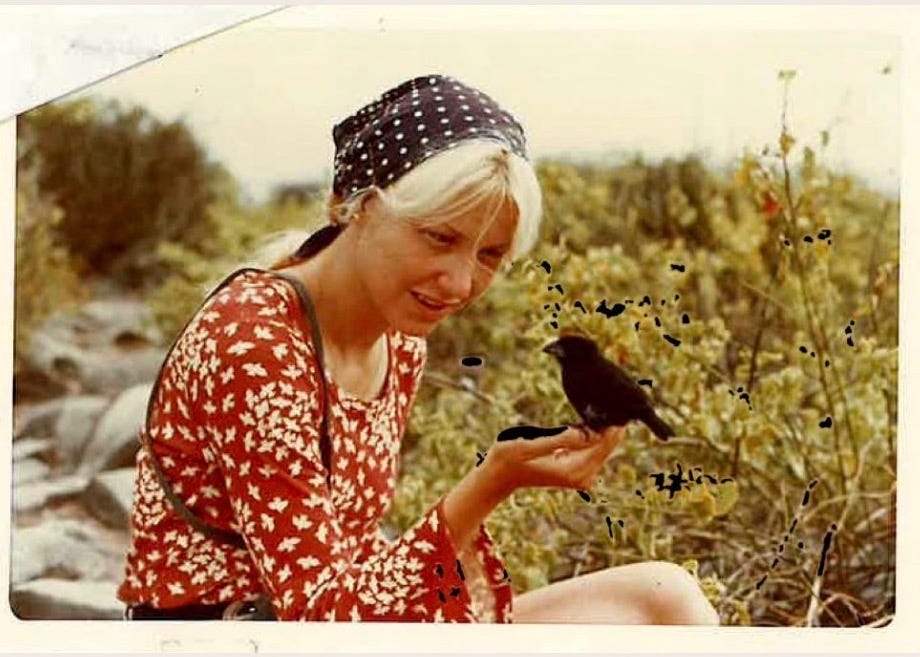
Imagining how Dillard danced to the exhilarating music of her own work can still bring tears to my eyes, and I wonder: What happens to our work now that AI and machines have become their own loud band of competing noise around us? Why still persist in slower human creations and absorptions when polished output is only a few prompts away?
Who still cares about what I do, make, or write—will our own good work remain worthwhile?
Or could the loudness of this new band perhaps also be an unexpected gift? By threatening to make our own work unnecessary or (even) less visible, it may return to us the courage that good work has in fact always demanded from us. When we become still and give sustained attention to what is raw and resonant and often slow (instead of what’s fast and possibly false), we may loosen our dependence on how many people may superficially like what we produce. We turn our center of gravity toward the work itself and away from a drive for performance.
The first reward of good work is the transformation it brings about within us, and what I think of as the alchemy of our own impressions. Such alchemy happens slowly through the books and question we feel drawn to, or the art that touches us. Good work, I believe, is how we give form to the story we have been trying to tell. That is at least how good work feels to me. Through reading and writing, I arrive at perspectives I could not have reached otherwise. I become less reactive and confined by old patterns of ego and more alive to possibility. At its best, the alchemy of good work alters something within me and, through that change, makes the world before me a little lighter or brighter.
Inner alignment remains fragile of course. Plus the loud sirens of AI can tempt us back into performing instead of the continuing of our authentic and necessary work. Jean-Paul Sartre, in Being and Nothingness (1943), gave this displacement (or misplacement) a quite fitting scene. A man peers through a keyhole, completely absorbed, until he hears footsteps behind him. Suddenly, his absorption gives way to anxiety and self-consciousness. Aware of himself as someone being watched, he becomes entangled with self-conscious thoughts about how he appears from the outside. External regard has begun to replace his work’s intrinsic rewards.
Sartre was not suggesting that all regard is false. But still. The scene reveals how easily the imagined gaze of others can pull us away from our own priorities and sensibilities toward some superficial attention we hope to attract. Good work need not mean abandoning readers or genuine human exchange. It does, however, ask us to protect the focus and solitude it often requires.
Perhaps the deepest reward of good work is giving voice to what was previously mute or unexpressed in us. Something we first had to learn to listen to before we could offer it as our gift to the world. “You were made and set here to give voice to this, your own astonishment,” Annie Dillard wrote in The Writing Life. Much of our good work is about what we already carry inside and return to, “as to unfinished business, for they are [the writer’s] life’s work.” For Dillard, much of this work took the form of words that she traced along her nerve of sensitivity. As for many of us.
Now the world is without Annie Dillard, but we still have her good work.
Thank you, Michelle Varghese.
Loved this and totally agree. I’d never heard of her before this…will be checking out the book.