

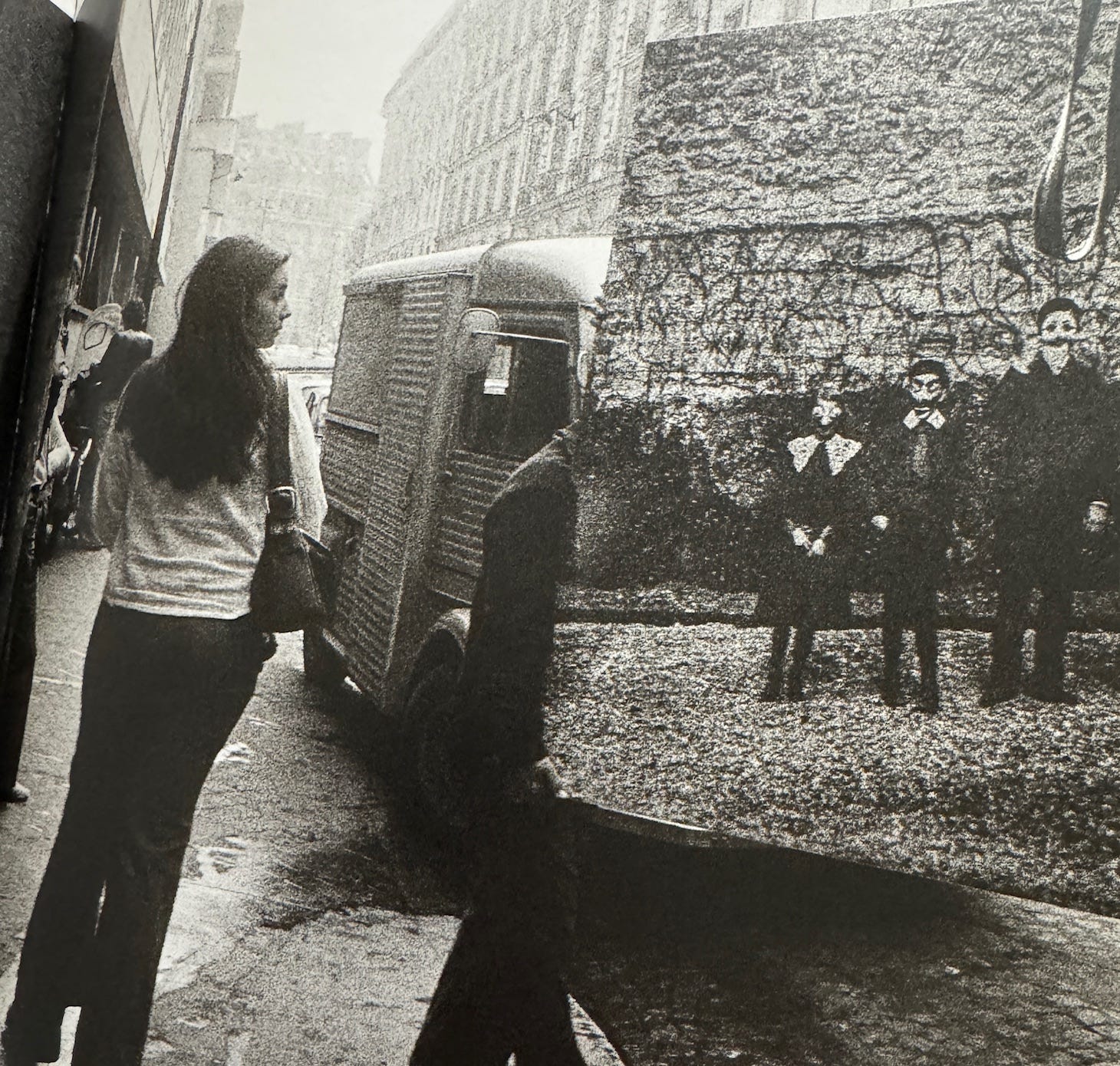
(photo credit: Jacques Henri Lartigue)
“The cave you fear to enter holds the treasure you seek.”—Joseph Campbell
I have two confessions to make: My daughter largely stopped reading for pleasure, and I find myself unsettled by it.
The glow of her phone screen reflecting on her face, I sense a distance between us grow. The cozy ritual and books we once shared—tucked under blankets, lamp casting a warm glow, books scattered around like colored leaves—now neatly put away. We were woven together, pointing, laughing, our voices rising and falling, both reveling in the wonder and silence held between the lines.
Now, silence fills with digital distractions. I try to resist the tide, holding fast to my books—something tangible, and meaningful, something demanding presence and time. But as I watch my teenage daughter drift away on the currents of her content feed, a pang of recognition stirs within me. I see something familiar reflected in her absorbed gaze: my own urge to escape into distraction. And now I wonder, what exactly is this force that pulls my mind away? What am I afraid to encounter when I linger in the silence?
My rational conscious mind—my steady champion—guides me competently through my tasks on most days. Focused and productive. But in silence, when its familiar guardrails fall away, I feel myself drawn toward deeper, more hidden parts of myself. There! This is where I feel a subtle avoidance, a quiet instinct to turn away, from what feels almost uncharted, almost wild. In these quiet moments, unruly thoughts bubble to the surface of my consciousness: fragmented memories or thoughts, foggy images, and repetitive, half-formed questions. They rise with a quiet power making me feel uncomfortable.
Mary Oliver once described this as the “intimate interrupter,” the “self within the self, that whistles and pounds upon the door panels.” I feel something pressing at my inner door—a background stream flowing from a deeper part of my mind. It teems with half-finished thoughts, replayed conversations, nagging questions: Why didn’t I speak up earlier? Why did I choose those words? What did they mean by that offhand remark? The other day, should I have made a different choice? Oh, why, all of a sudden, am I brooding or feeling lonely? Familiar yet dimly lit patterns of judgment and self-doubt arise, and of course, my judgment of others. It’s a stream that pulls me back to my old, almost childish ways of reacting and being, hinting at anxieties and fears I would rather keep hidden. Yes, it can be spooky when I sit in silence.
But when I summon attention, when I try to look at and feel into the texture and messages of these fragments—some formed in long-gone battle—I am surprised by how they like to vanish before I can fully grasp or recognize them. This elusive, wild force was captured with startling clarity by the British psychoanalyst Marion Milner nearly ninety years ago in her meta-diary A Life of One’s Own. She set out on a journey to uncover and describe the exact moments that brought her happiness, but it took her much longer than she anticipated. The process was slow—seven years in total—because Milner found that even on days when her mood seemed steady, she could still be taken off guard by foggy tug-of-wars: between her rational mind and a deeper, instinctual part of herself, each pulling in different directions. This tension made it hard for her to simply let go and ‘be’. And she caught glimpses of this: a lurking force, disturbing her from the shadows of her consciousness.
She named it: “The Ogre.”
The ogre, Milner discovered, often manifests as blind thinking. It tugs away from the present moment, leading thoughts into spirals of distraction and vague dissatisfaction. It can feel like a restless yearning, a perpetual sense of being one step removed from the present moment. Milner writes,
“There seemed to be a kind of thinking going, which carried me away into long winded scheming for things that it wanted, some plan or other which would not let me rest. And this state had spread from my mind to my body, so that my muscles were always taut with the effort to get what I wanted.”
I recognize my own blind thinking. My own ogre—restless, unseen, whistling and pounding for attention. I can be sailing contentedly through my day, only to be thrown off my emotional balance by some trigger. And I see it at work in my relationship with my daughter too—an unexpected response from her, her distracted glance when I’m speaking to her, and a worry may flicker: Is she pulling away from me, or am I inadequate, failing to reach her? A cloud forming from self-doubt and worry, nagging and vague.
But this is what Marion Milner is teaching me: Rather than brushing off this foggy unease, I can let it linger without demanding immediate answers. It’s like catching butterflies. In the stillness, cradling the butterfly carefully and turning its colors and patterns to the light, I begin to see a gentler truth emerge: that I am enough as her mother, so long as I trust in the natural unfolding of the moment, without imposing my own expectations. I got this, and she’s got this. With more acceptance and kindness, I can soften into being rather than urging control. And do what helps us both the most: simply being more present.
Whenever I am more patient with what may still feel raw in my heart, I feel becoming a gentler participant in the world around me. It’s a kind of wider, more wholesome awareness—a different way of seeing and attending to life. I think of Mary Oliver’s wise words in Wild Geese: “[I] don’t have to be good. [I] only have to let the soft animal of [my] body love what it loves.” When I open to more humility, I can shift my perception, almost by magic. Mesmerized by the present—that’s the treasure.
I want to be a role model for my daughter: lighting the way, but with a lighter touch. My mind goes back to a book we used to read together—Where the Wild Things Are. It’s a story about monsters, with a strange yet profound message: The things we fear most—the wild, uncontrollable forces within and around us—are not monsters to be defeated but parts of ourselves that need understanding. They are healed by the attention and love we offer. Our wild things need to be welcomed, gently turned toward the light.
Now, my daughter is drawing at the living room table, caught between worlds—her pencil exploring, while a screen flickers nearby. The glow of her screen reflects softly on her beautiful face. She’s right here, present in her own way. And right then, I feel mesmerized in sharing this moment with her.
Beautiful writing, Brigitte! You've got a gift.
Wow Brigitte, this is exquisite. Your use of all shapes, sizes, and tones of shadow to describe the light we need to hold ourselves and our children close. Thank you for this.