

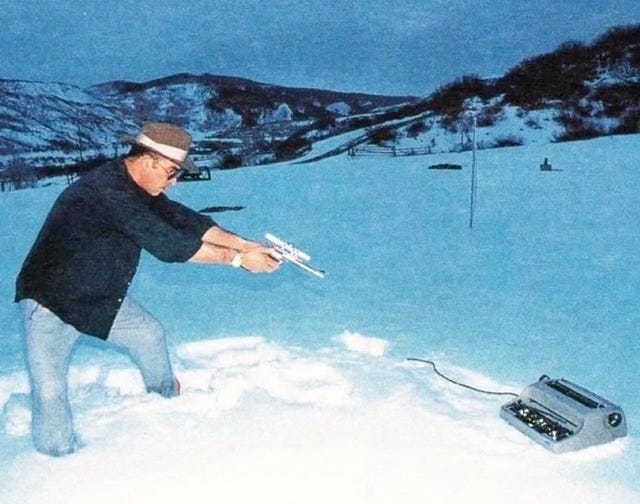
“I live, I live, with an absolutely continuous sense of failure,” is what the struggling writer in Iris Murdoch’s The Black Prince confesses in a confrontation with his literary rival. “I am always defeated, always. Every book is the wreck of a perfect idea.”
I haven’t written a book, but I know this feeling. Probably every writer does. The distance between the original pristine idea and what actually makes it onto the page can feel like a defeating humiliation. But that wreck, that shimmering debris field of what once seemed perfect, is also what the actual writing is. The writing that makes us grow.
Countless writers, or artists in general, have demonstrated that great art requires a lot of stamina and courage. It starts with an idea that seems perfect at first. But once followed to its more unknown edges, the original idea starts to feel soft and brittle, impossible to survive in its original form, at least if we want to arrive at what feels true and tender and worth of being carried into the world.
“Good art, whatever its style, has qualities of hardness, firmness, realism, clarity, detachment, justice, truth,” Iris Murdoch once described in the Paris Review.1 We start early drafts while intoxicated with endless possibility, only to end with the shipwreck of a much more limiting reality. The Sirens of the high seas2 want to test us, want to obliterate our egoistic illusions of safe construction and control. But when we persist and get washed ashore, the work that remains is often simpler and truer. Maybe the way of making sense of the Siren’s irresistible song is through our own creative imagination that is uncorrupted by fear.3
But such imagination often requires us to wait. It may take months or even years to write our best work. Inspiration and perspective accumulates. Experience enters, and it takes time to recognize what’s relevant and what eternal thing wants to be assembled or excavated. One piece of imagination leads to another. Two scrappy notes, taken at different times and contexts, may suddenly connect.
Take Rilke as an illustrious example. He began his Duino Elegies in 1912 after an almost mystical experience at Duino Castle in Italy, but didn’t finish them for another ten years, mainly due to writer’s block and “an inspiration-stifling depression” he suffered during and after World War I. Then, finally, after working through his many inner tensions of how to square both the darkness and the joys of human existence, they poured out of him in a feverish burst in 1922 and alongside his famous Sonnets to Orpheus.4 In his Letters to a Young Poet he had already advised his young pen pal Kappus that “Patience is everything!”, to allow feelings and impressions to develop internally and “wait with deep humility and patience” for more understanding.
It took Melville three years to write Moby-Dick (well…I’d call that record speed), a time span he needed to outgrow the adventure-tale formulas of his earlier career and face the philosophical depths of his own novel. He reread Shakespeare, studied biblical cadences, and let the material work on him until the book could become the storm that it is.5
This time of waiting is often a kind of slow fermentation and can be both frustrating and precious. In my own writing, I’ve learned to trust my attention and how it often reliably guides me toward the direction and nuance of what I’m trying to express. I’m my own magnetic center; I often attract insights either from reading or from real-life encounters that I suddenly recognize as valuable for my work in progress. This creative processing unfolded, in small, for this essay as well. I started out with what seemed like a perfect idea, imagined its initial outline quite clearly, yet a collection of rough notes and first drafts later, I was feeling unsure if I could make its content structure strong and cohesive enough, plus I was still missing the “just right” cover image that I like to aesthetically align my pieces with. Further inspiration arrived with Annie Dillard’s book The Writing Life and, posted a few days ago, a Substack note that showed the 1989 photo of Hunter S. Thompson and his beloved, hated typewriter. In The Writing Life this only book that Annie Dillard wrote about writing and creativity, she encapsulated this meandering search and process I was trying to describe so perfectly:
“The line of words digs a path you follow… It is a fiber optic, flexible as wire; it illuminates the path just before its fragile tip. You probe with it, delicate as a worm.”
As a child, I remember flying my kite on the hill behind my childhood home. Running as fast as my tiny legs could carry me through the long golden grass of late summer, I knew the kite could be either given to the giddy turns of the wind or the crushing pulls of gravity. Following the yellow-black dragon’s capricious movements made me feel alive, and I intuitively knew that I had to give it to the rhythm of the world. Only then could I hope for it to gain momentum.
Momentum is what propels our creative engines when we write. When the words finally appear and shine their light on the path ahead, they almost feel unearned. But when such precious momentum strikes, we should trust this “gold standard that anchors creative life,” as Rick Lewis recently wrote in a Substack note: “If you’ve got it, protect it–with every ounce of attention that you have. Lock it in, by hook and by crook.” Momentum crushes doubt and failure, and we are well advised to follow its lead. When I arrive at writing with flow, and have finally given up control, I sometimes sense what Annie Dillard described as the grace of writing (and of course it can be applied to all art), and it is glorious:
“At its best, the sensation of writing is that of any unmerited grace. It is handed to you, but only if you look for it. You search, you break your heart, your back, your brain, and then–and only then–it is handed to you. From the corner of your eye you see motion. Something is moving through the air headed your way.”
From the corner of my eye, I see my fear of failure losing its grip, now a wreck of burning ashes (haha). From the other corner of my eye, I suddenly see what wants to be written. As if guided by such a hand of grace, the right words are rising from the wreck of my once perfect idea.
And sometimes, they rip away my breath.
The Paris Review, Iris Murdoch, The Art of Fiction No. 117, issue 115, 1990
These mythological creatures, originally depicted in Greek art and literature with the body of a bird and the upper body of a woman, were said to have the power of irresistibly beautiful song of wisdom and knowledge. Sailors who heard the melody would be driven mad with desire, causing them to steer their ships into the treacherous, hidden rocks and perish.
Tamara (@museguided) recently wrote in her piece “Dreaming While the World Burns” how “imagination has carried more revolution than fear ever did.”
Poetry Foundation: Rainer Maria Rilke; also in this article, Rilke scholar C. M. Bowra praises the lyrical power of both collections and indicates what took so long to ferment in the poet’s mind and heart: “The Sonnets are the songs of his victory. Rilke shows what poetry meant to him, what he got from it and what he hoped for it. The dominating mood is joy. It is a complement to the distress and anxiety of the Elegies, and in Rilke’s performance the two books must be taken together.”
Nathaniel Philbrick, Why read Moby-Dick?, New York, 2013
Brigitte, you have such a gift for capturing the ephemeral and putting words around experiences most of us only ever feel. This gap between the perfect idea in our minds and what actually lands on the page is something I’ve felt many times, and you named it with so much clarity and grace. This was beautifully written.
This is beautiful. You captured that aching gap between the perfect idea in our minds and the imperfect, hard-won thing that finally makes it onto the page.