

Around the age of 50, Leo Tolstoy experienced a deep existential crisis over what he perceived as the meaninglessness of life. Later termed “the Tolstoy problem”, his questioning became a famous expression of lost human and spiritual connection, a symptom of the predominantly mechanistic worldview of the West. “What will become of my whole life?” and “What is it all for? Why live?” were some of the questions he desperately wrote into this diary. Over stretches of his life, despite his high external acclaim and work efficiency, Tolstoy felt estranged from his own essential core of self and even the family around him.
This Tolstoy problem still haunts modern life. I believe it expresses our human despair that comes from falling out of resonance with the world. Interactions and relationships may feel weirdly flat and meaningless, made worse by the cultural denial that something was lost in the first place. Locked inside our neuroses and loops of habitual thinking, we become somewhat blind to the omnipresent richness of reality and the energetic potential that flows from our relationships.
We’ve lost the once sharp sense for life’s inner vibration, are denying ourselves the belief that life speaks back to us.
German sociologist Hartmut Rosa offers a way to understand this condition. In his book Resonance,1 he describes how the quality of our relationship toward the world – of being in relation with the world – determines whether we feel alive or alienated. For Rosa, resonance, as antidote to a feeling of separateness, is “what it feels when the self and the world meet in a living, responsive relationship.”
To illustrate better what he’s getting at, Rosa goes from the abstract to the more concrete by offering the example of two adult twins, Anna and Hannah. The sisters live in what they believe is “the prime of life” and in very similar life circumstances. Yet, and now it gets interesting, they experience the world and even their daily social relationships in profoundly different ways. Hannah feels often burdened by the world’s demands and intrusions, while her identical twin sister Anna responds to them in a substantially different way. For Anna, life vibrates with meaningful and loving relationships, and is therefore deemed “successful” by Rosa. Hannah, on the other hand, often feels heavy, grumpy and inert, her life appearing rather unsuccessful.
Over the course of a few typical morning hours (simplified of course, and shown here only in parts), Rosa lets us ‘accompany’ both twins as they move through their world:
It is 7:00 am. Anna sits down to breakfast. Next to her is her husband. Her adolescent son and nearly adult daughter join them almost immediately. Her children beam at her, and she beams back. My God, she thinks, how I love them. These moments together before starting our on our days are everything to me.
It is 7:00 am for Hannah. She sits down to breakfast. Next to her is her husband. Her adolescent son and nearly adult daughter join them almost immediately. Her bad mood is readily apparent. Everyone at the table looks at each other sullenly, if at all. My God, Hannah thinks, how I hate this. What do I have to do with these people? What ties me to them, other than the fact that I have to provide for them?
8:00 am. Anna is now on her way to work. The sun is shining. She takes pleasure in the warmth and enjoys a good stretch. She looks forward to seeing her co-workers; she has some stories to tell them. She quickens her pace at the thought of the flowers someone left on her desk today. She’s ready to get down to business. She loves her work.
8:00 am. The sun is [also] shining on Hannah’s way to work. Hannah hates the harsh light. She’s afraid of getting sunburned. She thinks glumly about the work that lies ahead. It’s bad enough to have to see the gloomy faces of my co-workers every day and put up with their constant patter.
As readers, we may, ever so slightly, tap into the music and inner vibration of their thoughts, with Hannahs’ more flat and muted than Annas’. Hartmut Rosa then describes what Anna can teach us about the potentiality of a life:
“Life is good not (or at least not necessarily) when we are rich in resources and opportunities, but rather, however banal and even tautological this may at first sound, when we love it. When we have almost a visceral and emotional connection to it – it here meaning the people, places, tasks, ideas, objects (...) that we encounter and with which we interact.”
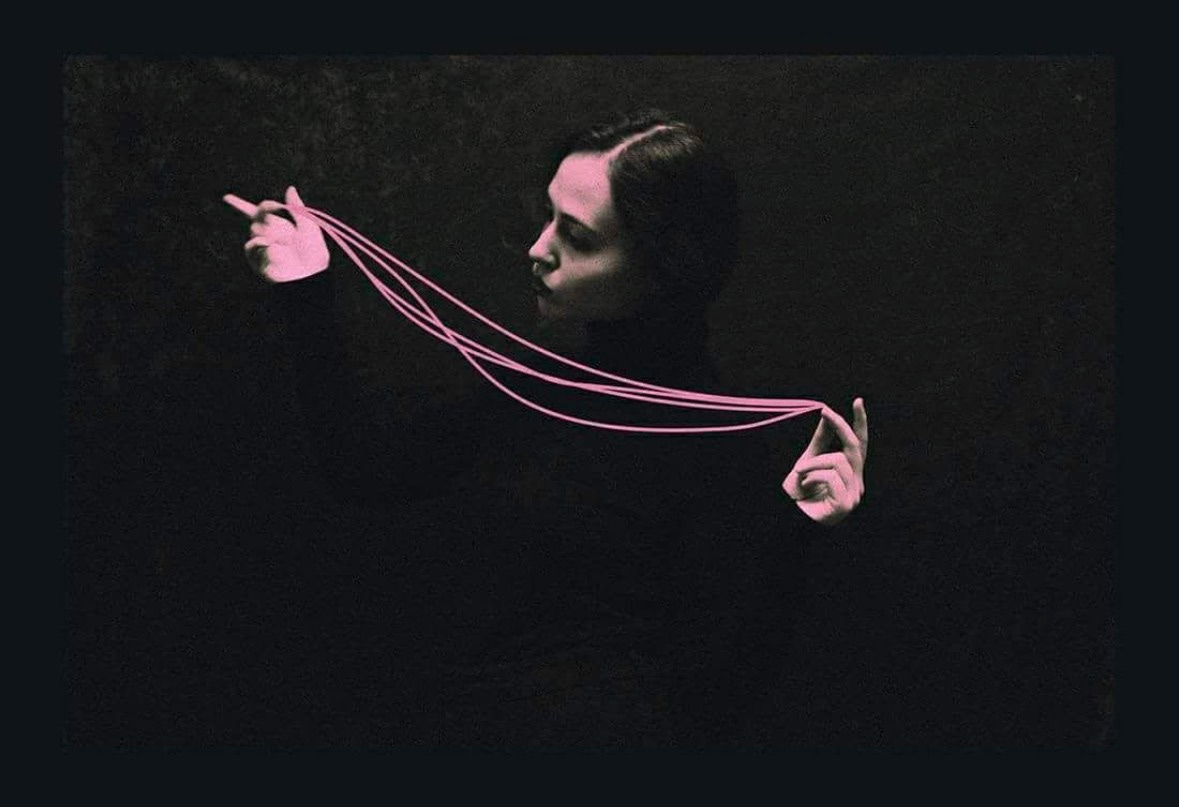
Anna’s life description serves as a role model for a way of life and relationship to the world that is, and here again in Rosa’s words, “more responsive, elastic, fluid, one might even say cuddly… [Because] when we love these things, there emerges something like a vibrating wire between us and the world.”
I find this wording stunning: there is something like a vibrating wire between us and the world.2
We were meant to feel each other, and Anna seems to be living life from this place. She feels connected to her family and co-workers and is more attuned with nature. She believes that she can attain or affect something in each of these spheres (and she’s right), and feels that she can be affected and touched by them too.
We all catch glimpses of this inner life of things. Resonance is everywhere and elemental. Spiritual and psychological teachings speak about how our heart3 and psyche4 can open us up to more of it. Moment by moment, we can actively participate in the world and its potential. We are touching the world, and the world touches us.
Resonance is a generative impulse: life e x p a n d s. It compels us toward transformation and a higher, more evolved way of being: We can change! We can be more like Anna!
What’s catching my eye at this very moment? What are the signals, even the subtlest, when I pay attention?
In front of my large windows, thousands of yellow and red leaves are dancing against fall’s stark blue skies. My hands on the keyboard are catching their flickering movement, shadow and light turned into rhythm. For a tiny moment, my imagination reaches toward whatever life force and joy is animating them. I’m catching a piece of their vibrant energy onto the page, passing it on to you. And I’m asking you: What is catching your eye right now?
Every moment, we have one shot at being. Resonance helps us find the way.
A special thank you to Alden Cox Matt Joass Larry Urish Rick Lewis Linda Kaun, and of course Rachel Parker for helping me with feedback on this piece.
Rosa, Hartmut. Resonance: A Sociology of Our Relationship to the World. Translated by James C. Wagner, Polity Press, 2019.
Alden Cox, a writing friend who gave me feedback on this piece, gave me this (resonant) comment with me, and I am sharing it here with her permission: “What if every single cell in our bodies vibrate with every other, in all of nature and our planet? Our sense of attunement can and will open gently, spontaneously, to sense ourselves in the midst of an infinite symphony of resonance, in which we can consciously participate? Even Hannah singing her sad, grumpy tune is engaged and contributing. Her she is in Dr. Rosa’s book and in your essay, contributing her contrast by which we benefit, feeling compassion, choosing to raise our vibration toward more love like Anna’s, from which she may benefit. We make this life music together. In each moment, any moment, one moment at a time. And we’re all listening, one way or another.”
Just today, I was made aware of heart research that identified specialized cells in the human heart called sensory neurites that are essentially brain-like cells, except they’re not in the cranial brain but in the heart. Scientists have referred to them as “the little brain in the heart.” Conscious Life Journal (2018, July 1), A Conversation with Gregg Braden.
There are multiple models and interpretations describing the evolution of one’s consciousness from ego-centered toward more soul-centered stages of awareness and integration. One example is Tara Springett’s model of the nine stages of consciousness development, presented in her book “The Stairway to Heaven: A Step-by-Step Guide to the Nine Stages of Enlightenment (O. Books, 2011).
Brigitte, your essay serves as a wonderful reminder that, in a material world supposedly made of "solid" matter, we're actually vibrations. (The physics behind that is WAY over my head, but I trust the folks behind this seeming impossibility.) I used to think that the manner in which we vibrate is out of our control. However, you explain in a very accessible manner that we can *choose* how we vibrate, how we resonate in the world with ourselves and others. And this resonance isn't merely important; it's absolutely critical. Thank you for opening my eyes to this compelling phenomenon.
By the way, I really love how you end the piece by placing us, your readers, with you as you sit at your keyboard. The vivid imagery is really well engaging. I guess you could say I really resonate with it ... and I'm certain I'm not the only one. Well done!
This is beautiful and a reminder that aliveness isn’t something we earn through effort; it’s something we allow. The “vibrating wire” makes me think about how easily we confuse numbness for safety. Maybe resonance begins when we stop armoring against wonder; when we let the world touch back.